
Healing Chicken Soup with Hidden Veggies (From Scratch)
This homemade healing chicken soup is the perfect cozy meal. It’s full of anti-inflammatory ingredients to help you feel comforted and well.
About
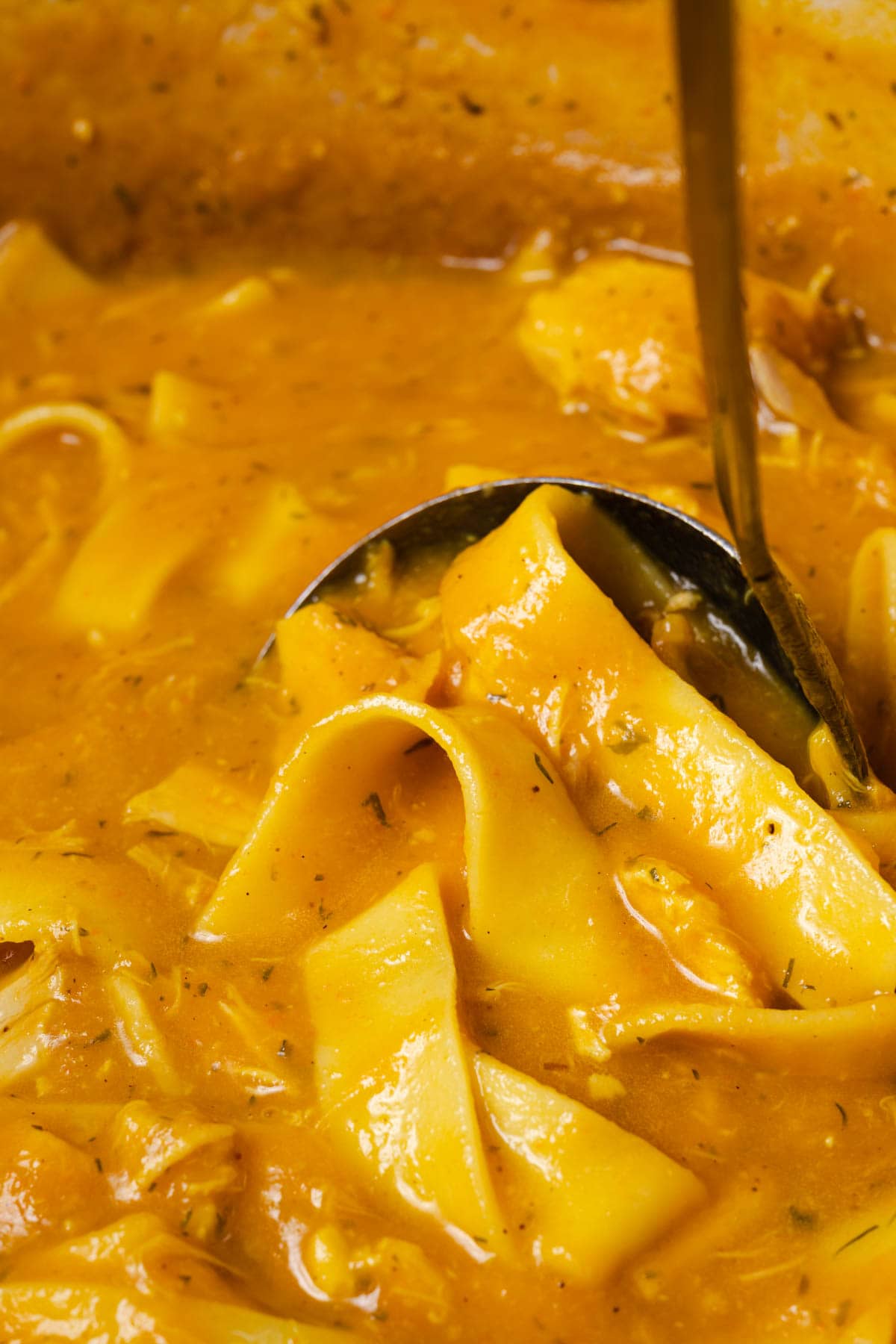
I’ve already made this cozy soup 6 times this winter. No one’s sick of it, and my kids are still begging for more. This is the ultimate soup for sick days. The only shortcut we’re gonna use is the premade egg noodles. Homemade chicken soup is a labor of love.
This soup begins with a homemade, immune-boosting stock. It’s simmered with anti-inflammatory ingredients, while keeping the characteristic flavor of traditional chicken soup.
The secret ingredient is pureed hidden veggies. This creates a robust and delicious broth that has added nutrients from vegetables. It will please picky eaters and veggie lovers alike. As a certified veggie lover, I love the flavor and body that the pureed vegetables give to this soup.
Continue reading for a deep dive into what makes this healing chicken soup special. If you’re not into that, you can use the button at the top or the link in the table of contents to skip straight to the recipe.
Why it Works
This chicken soup is made with carefully chosen ingredients and thoughtful techniques. This results in a soup that is delicious, healing, and comforting.
- The recipe starts with poaching a whole chicken. Then the meat is removed before simmering the stock. This ensures that the chicken is moist and tender, rather than overcooked.
- It uses from-scratch stock to create a rich and nourishing base. It’s easy, but requires patience.
- The vegetables are blended into the stock. Pureed veggies create a full-bodied, rich, silky, almost creamy broth (without using flour or cream). It makes this soup ultra-hearty and comforting. Plus, it has the bonus of hiding the veggies from picky eaters. It’s important to get those nutrients when the cold season hits!
Chicken Soup for the Soul and Healing Properties
Chicken soup is the standard food for colds, and for good reason. At this point, we’re all conditioned to crave it as a go-to comfort food. There’s like a biological urge to make it for our loved ones. But y’all, the science is also there.
Chicken soup’s healing properties are known in cultural wisdom and supported by scientific studies. There’s usually a reason why things like this become lore. Our ancestors knew what they were doing, and Grandma was right.
I love it when science backs traditional wisdom. It’s so validating. I’m not a medical professional. But I love food and nutrition. Bear with me while I nerd out for a minute!
Benefits of Chicken Soup
- It’s hydrating to support the body’s healing process.
- It’s hot & steamy to open nasal passages and loosen mucus.
- Chicken soup is easy to consume, contains calories for energy, and may stimulate appetite and help with digestion.
- It contains antioxidants and anti-inflammatory ingredients that promote healing and calm inflammation.
- Preparing soup from scratch is an act of love, and serving it comes with positive psychological effects. Chicken soup makes us feel loved and supported.
Check out this study that suggests that Grandma’s soup has real value for helping with colds.
Here’s another study that shows eating chicken soup actually helps loosen and move nasal mucus (better than hot or cold water).
Ingredient Notes and Nutrition Highlights
A cup of this soup has about 250 calories, 17 grams of protein, and 2 grams of fiber. A 2- cup, dinner-sized bowl contains approximately 34 grams of protein.
It happens to be dairy-free. Make it gluten-free by using your favorite gluten-free noodles.
Cold Water
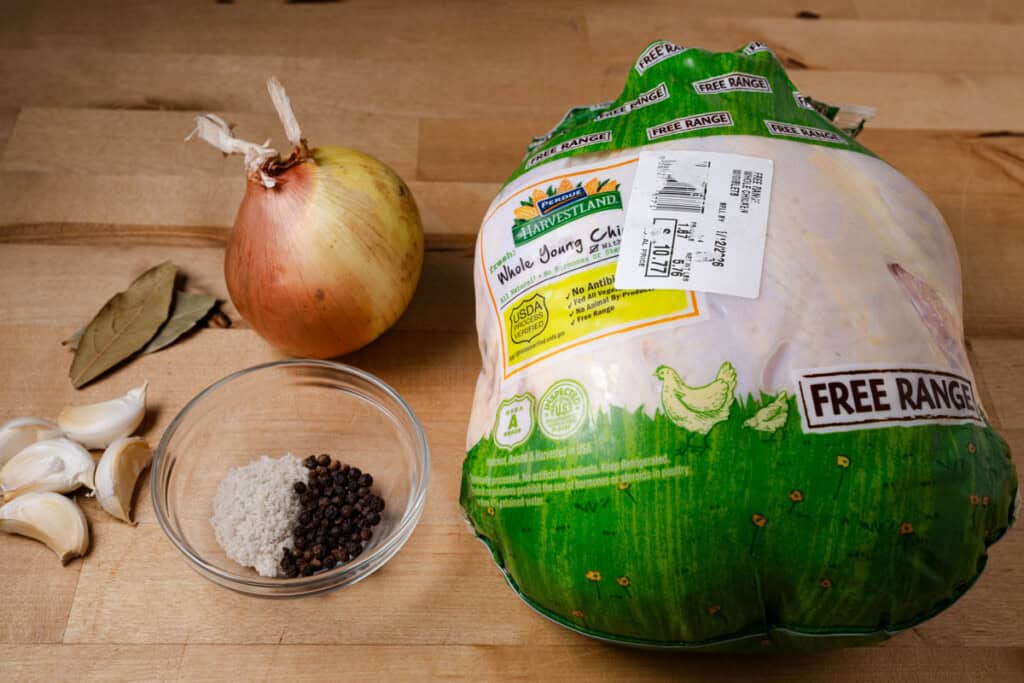
Starting with cold water when poaching the chicken gently cooks it, resulting in flavorful, tender meat. Then, using cold water to finish the stock helps result in a clean, clear stock.
Free Range Chicken
A 5-pound chicken will yield about 5 cups of cooked meat. It makes enough for 2 batches of soup, or leftovers for another recipe. Use the best quality chicken you can afford. Free-range chickens tend to produce a better stock than conventional ones. The chicken adds protein and creates a rich, flavorful stock.
Ginger
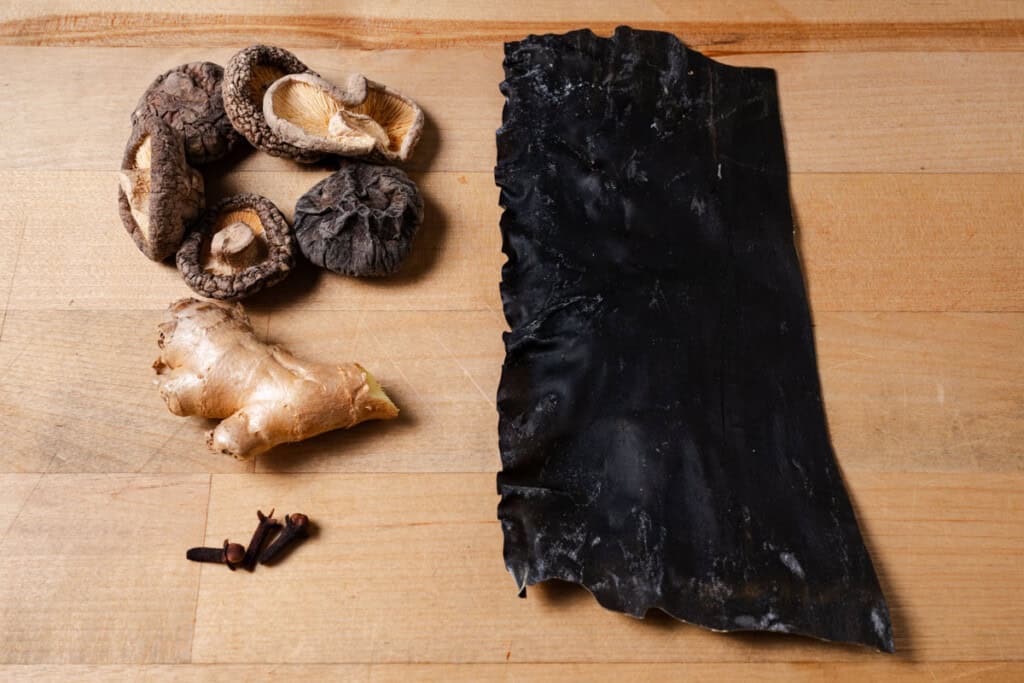
Ginger has anti-inflammatory properties, so I like to simmer it in the stock. We won’t add enough to give the stock a pronounced flavor.
Cloves
Cloves are rich in antioxidants and have an anti-inflammatory effect. They also deepen the flavor of the stock.
Kombu & Mushrooms
Kombu (seaweed) and dried shiitake mushrooms are rich in minerals. They also add a deep umami flavor to the stock. I keep them in my pantry in dried form. You can order them online or find them at a specialty Asian grocery store. You can leave these out if you prefer.
Garlic
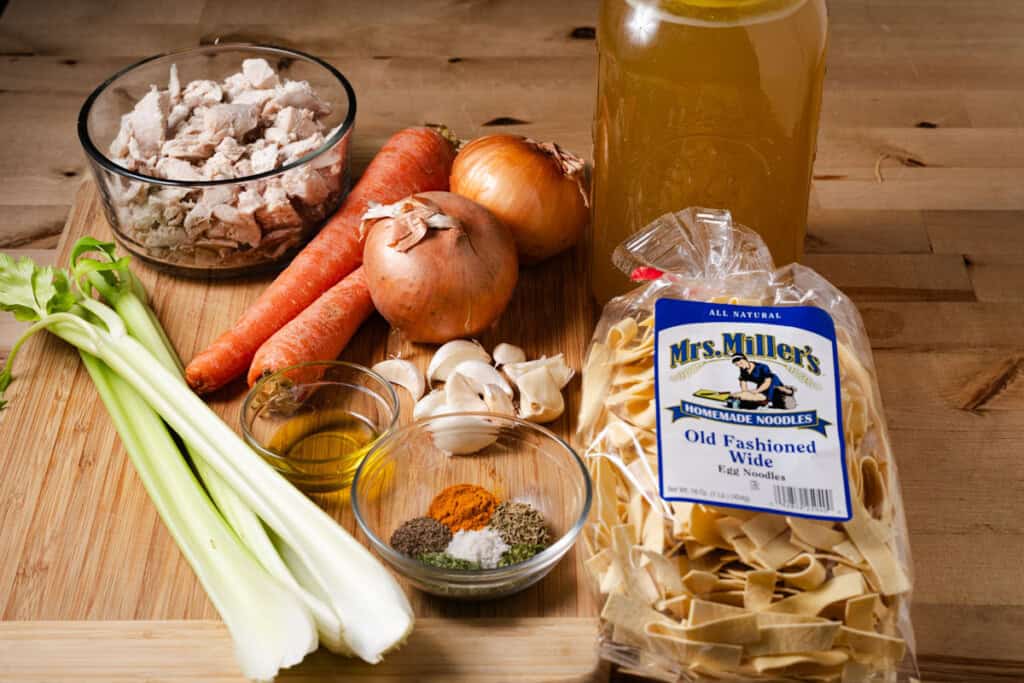
The garlic amounts in the recipe are not a typo. We all love the flavor of garlic, but it adds more than flavor.
Garlic is another anti-inflammatory food. The compound responsible for garlic’s anti-inflammatory effect is allicin. Studies show that heating garlic reduces the allicin. This reduces the anti-inflammatory effect, compared to eating raw garlic. But even though it isn’t as powerful as eating raw garlic, cooked garlic retains its anti-inflammatory properties.
Herbs
This soup calls for bay leaves, dill, thyme, and parsley. It uses dried or freeze-dried herbs for ease of access during the fall and winter months. You can substitute fresh herbs if they’re available.
My recipes call for freeze-dried dill because its flavor is comparable to the fresh herb. Litehouse brand freeze-dried herbs are found in most grocery stores.
Herbs add flavor and are rich in antioxidants. Check out this data that shows that herbs retain antioxidants after drying.
Turmeric & Fresh Ground Black Pepper
Turmeric adds a beautiful golden color and a deep, slightly earthy flavor to the soup. But there’s an even better reason to include it in healing chicken soup.
Turmeric is anti-inflammatory and is rich in antioxidants. I pair turmeric with black pepper in recipes because they work together in the body. And luckily, they taste great together.
Piperin, which is present in black pepper, increases the body’s ability to absorb curcumin, the active compound in turmeric. Combining piperin with curcumin has been shown to increase bioavailability by 2000%.
Unrefined Salt
Unrefined sea salt, like grey Celtic salt or real salt, is mineral-rich.
Vegetables
Onions, carrots, celery, and plenty of garlic are cooked in extra virgin olive oil. Then they’re simmered in nourishing stock and pureed directly into the soup.
Egg Noodles
My favorite noodles are Mrs. Miller’s Old-Fashioned Wide Egg Noodles. They’re hearty, thick, and satisfying. If you can’t find them, you can order them or use your favorite egg noodles.
Variations
I sometimes add a can of rinsed and drained navy beans for more fiber.
How to Make it
Equipment Notes
You’ll need:
- An immersion blender or blender
- A fine mesh strainer or colander lined with cheesecloth
- Large, heat-resistant containers for straining stock
- A large stockpot. You can do this in one pot, but I like to use 2. I make the stock in a large stockpot and make the soup in a large enameled Dutch oven. Using 2 pots may dirty more dishes, but it streamlines the process and allows you to simmer a second batch of stock.
Here is a visual guide to help you prepare the soup. See the recipe card for full instructions and ingredient amounts.
1. Poach the Chicken
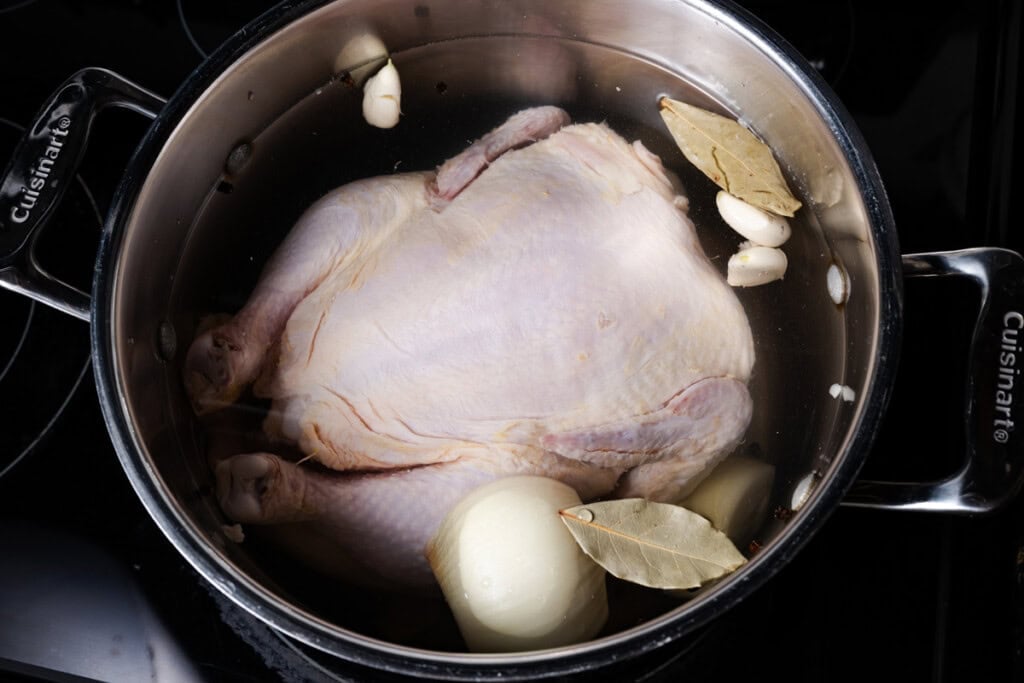
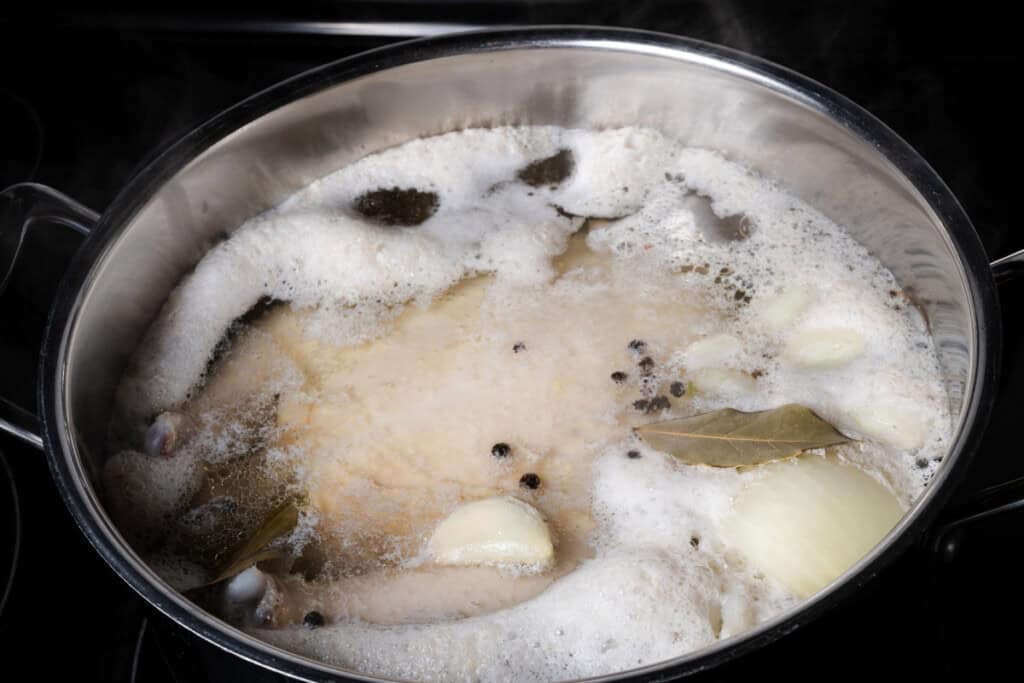
First, we’re going to poach the chicken. Add 3 quarts of cold water, the garlic, onion, peppercorns, bay leaves, and salt to a large stockpot.
Then, place the whole chicken in the pot. There should be enough water to submerge the chicken by about 1/2 an inch. If there’s not enough, top it off with more cold water.
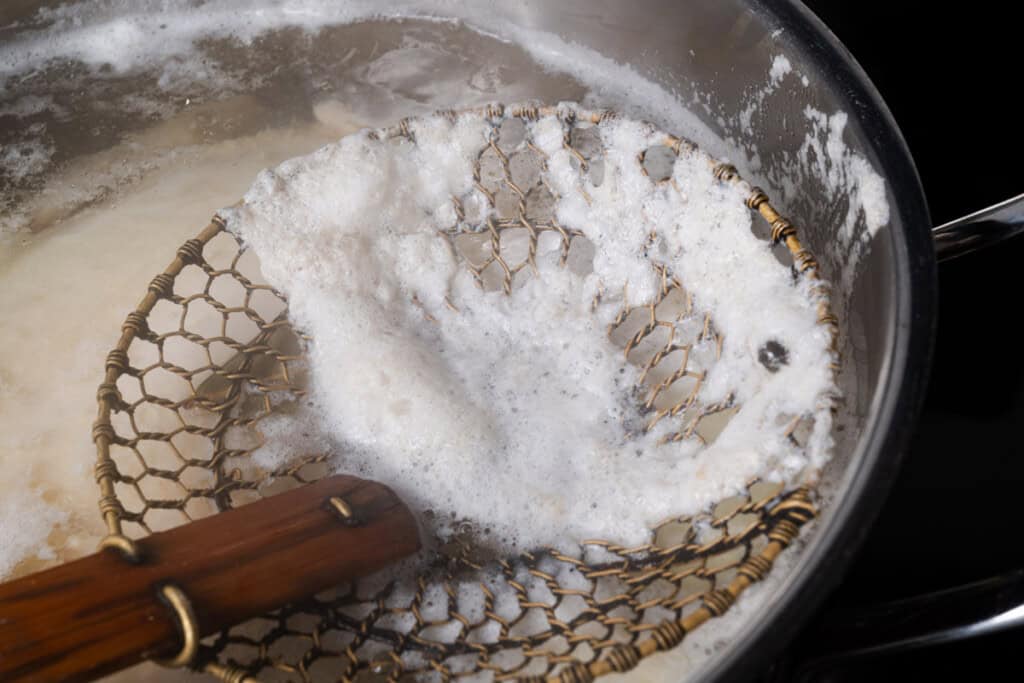
Heat over medium-high heat until it reaches a simmer. Skim off any foam that rises to the top.
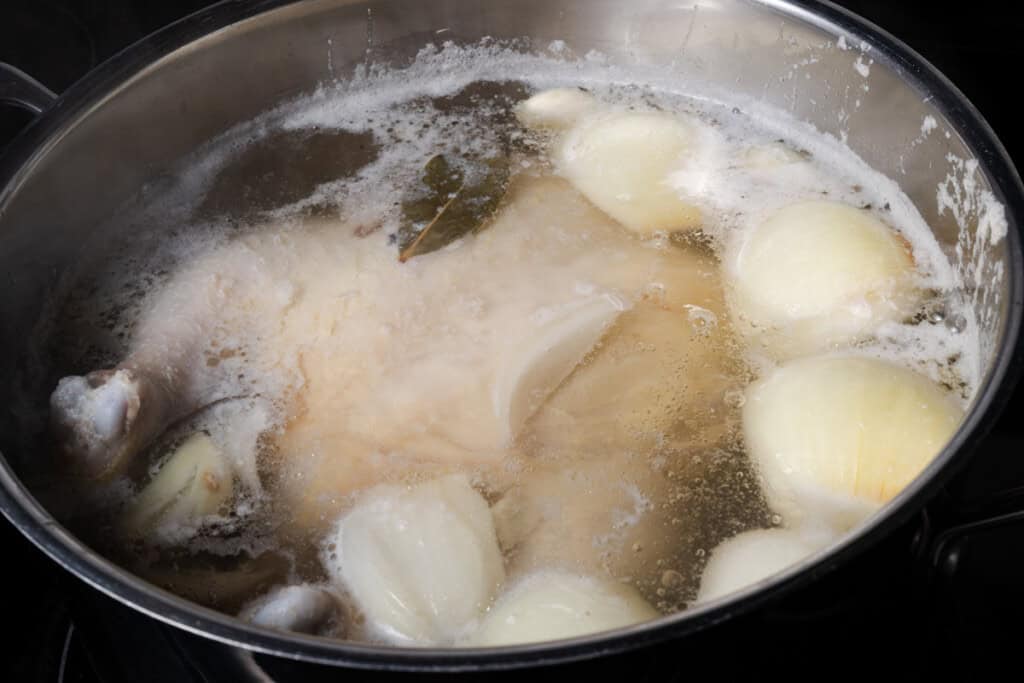
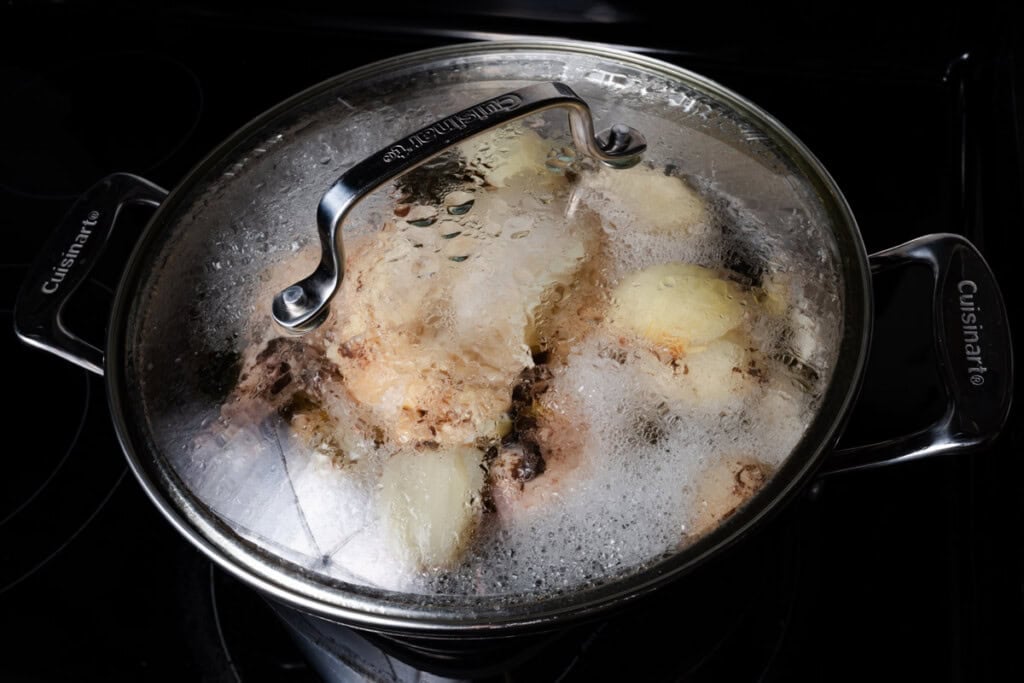
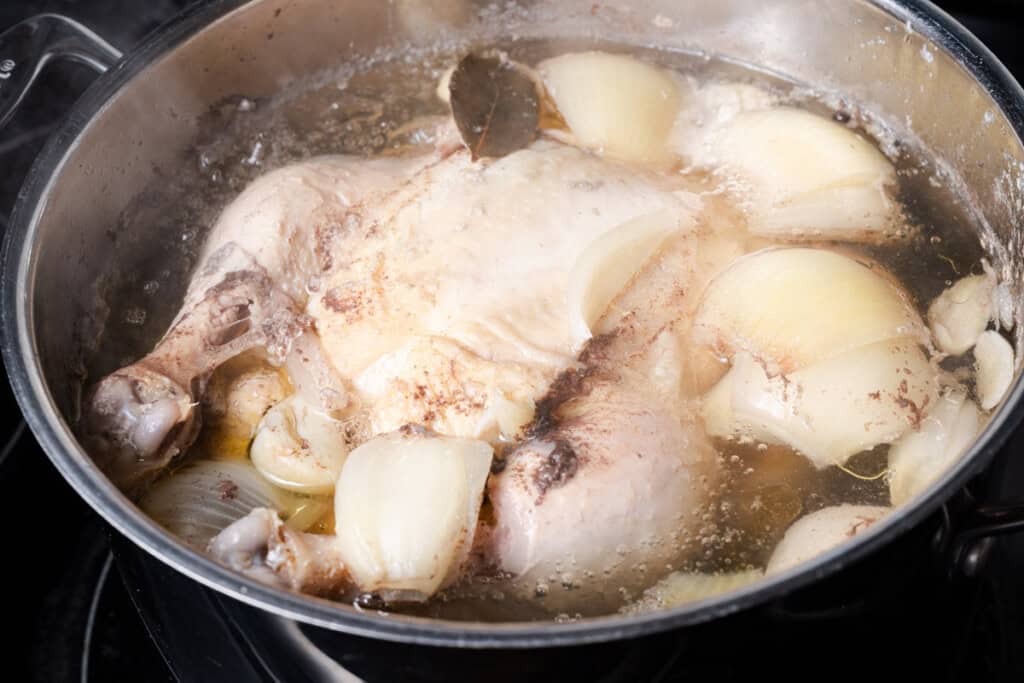
Then, cover the pot and reduce the heat to low. Simmer for 1 hour. After 1 hour, check to make sure the thickest parts of the meat have reached 165℉. If it’s undercooked, cover and continue cooking until it’s done.
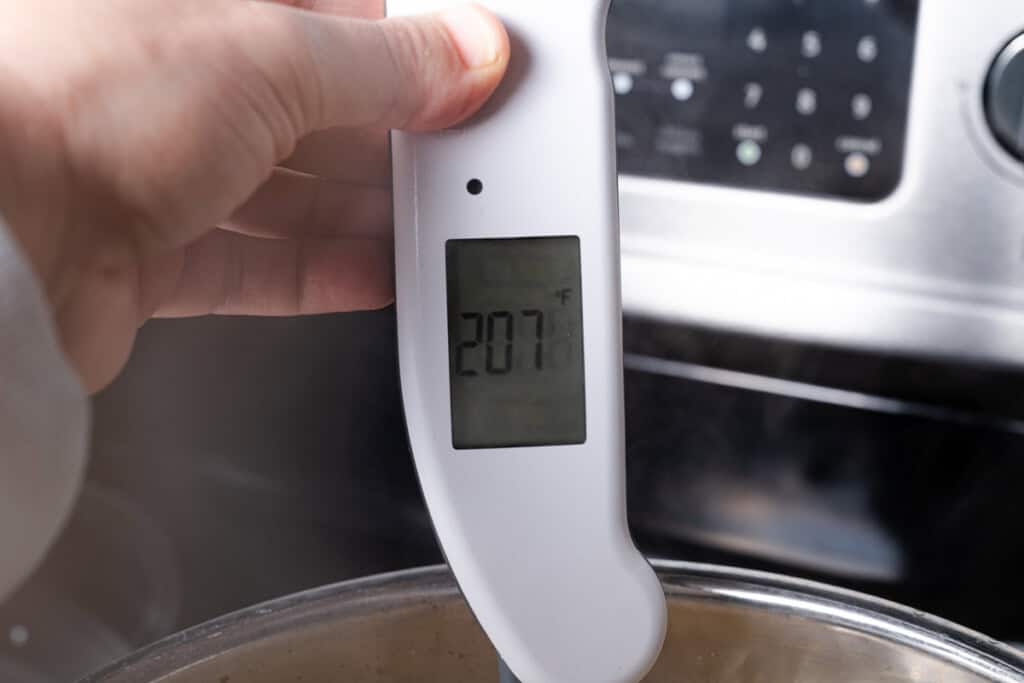

The chicken in the photos weighed about 5 1/2 pounds and was over 200℉ after 1 hour of simmering. Most chickens will take between 45 minutes and 1 hour and 15 minutes to finish cooking.
Once it’s done, transfer the whole chicken to a large dish with sides to catch the juice. Let it cool enough to handle, then remove the meat. Dice or shred the meat. Refrigerate half of it for the soup, and save the other half for another use.
2. Make the Stock
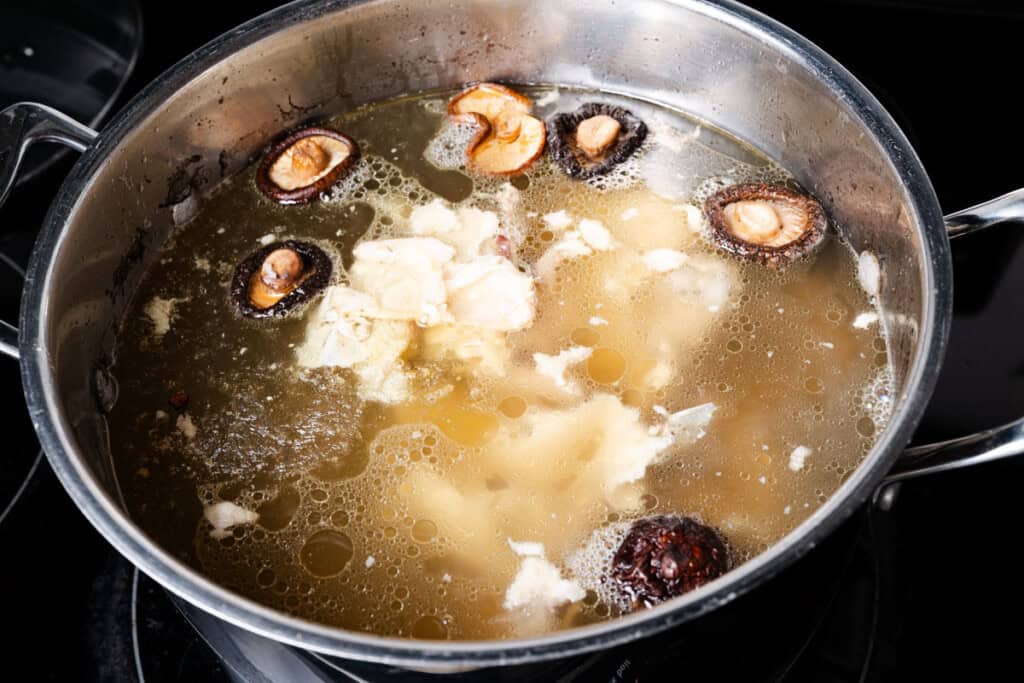
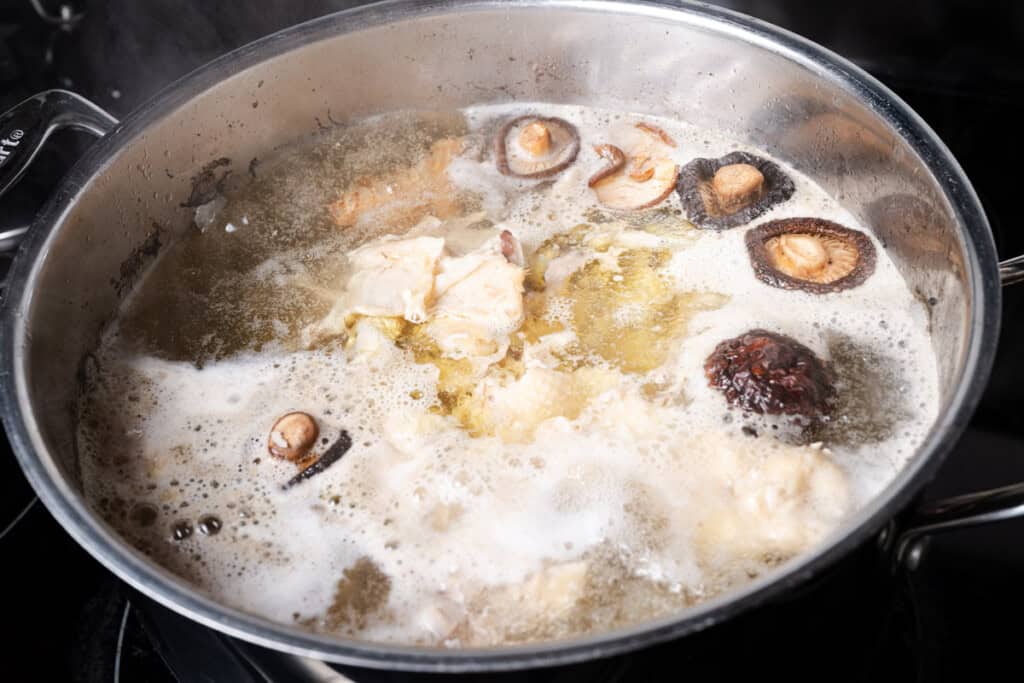
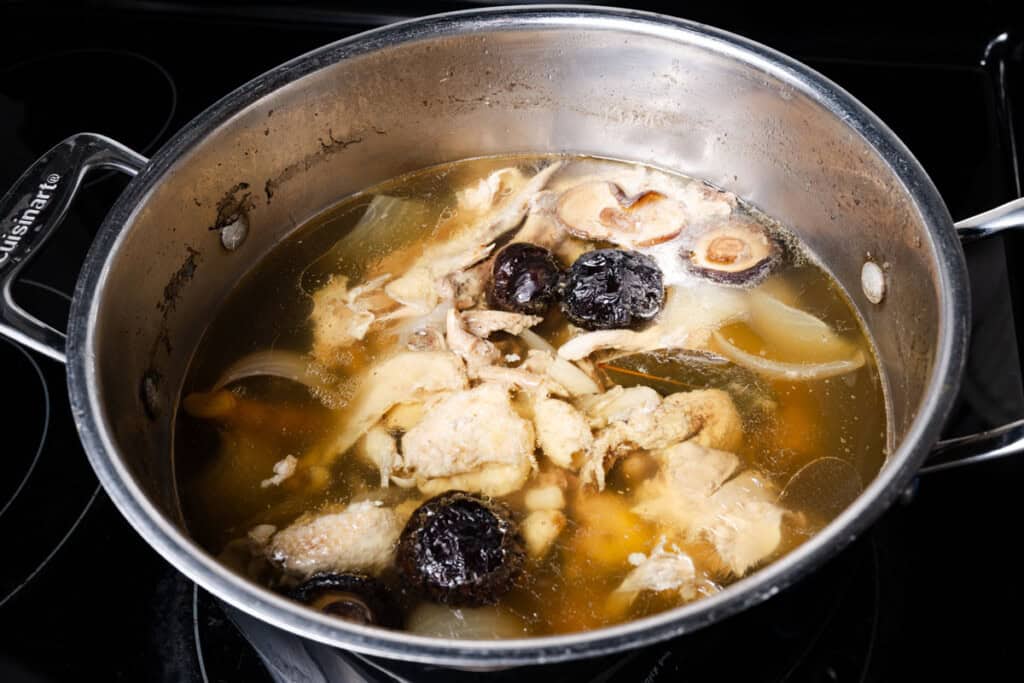
Return the carcass and juices to the stock pot. Add the cloves, ginger, kombu, dried shiitakes, salt, and another quart of cold water. Return it to a simmer over medium-high heat. Then, reduce the heat to low and cover with the lid slightly tilted. Simmer for 2 to 4 hours.
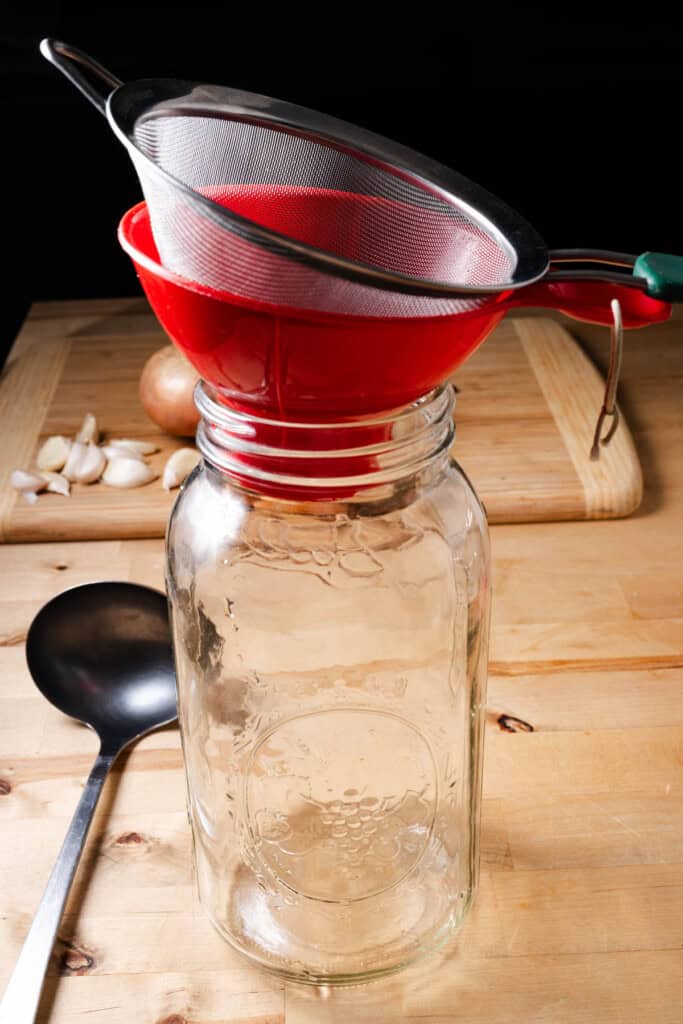
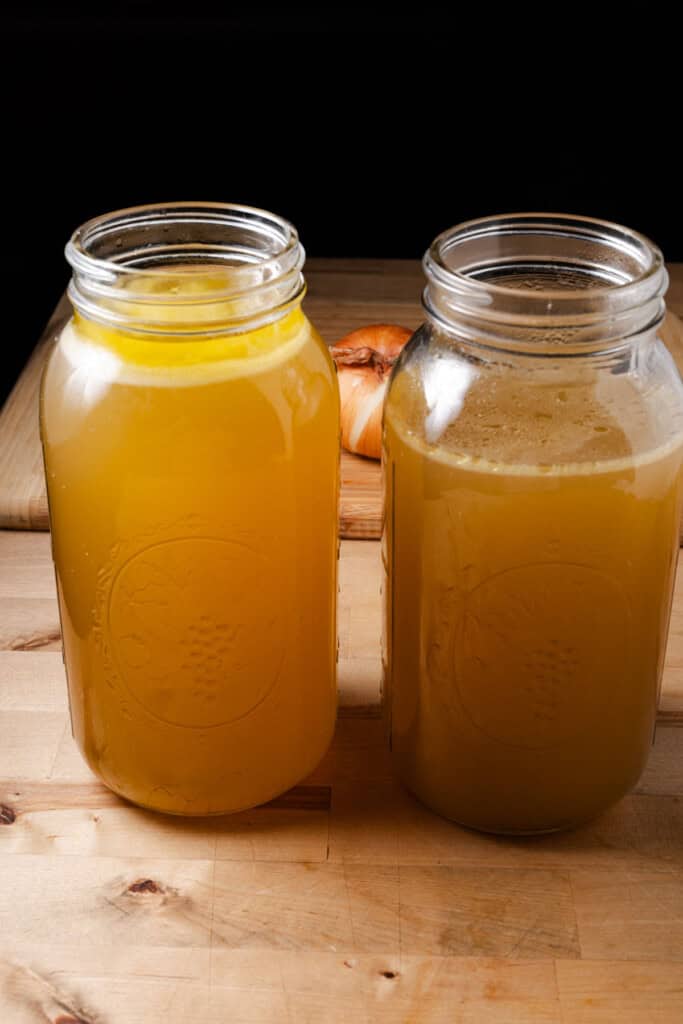

Time to strain the stock! My preferred method is to use 2 half-gallon glass jars. I fit the jar with a wide-mouth canning funnel, then place a medium-sized mesh strainer on top. Then, I ladle the stock in.
You should end up with about 1 gallon of stock. Use half of it for the soup and save the other half for another recipe.
If you want a less fatty stock, you can use a spoon to skim the layer of fat that rises to the top.
3. Make the Soup

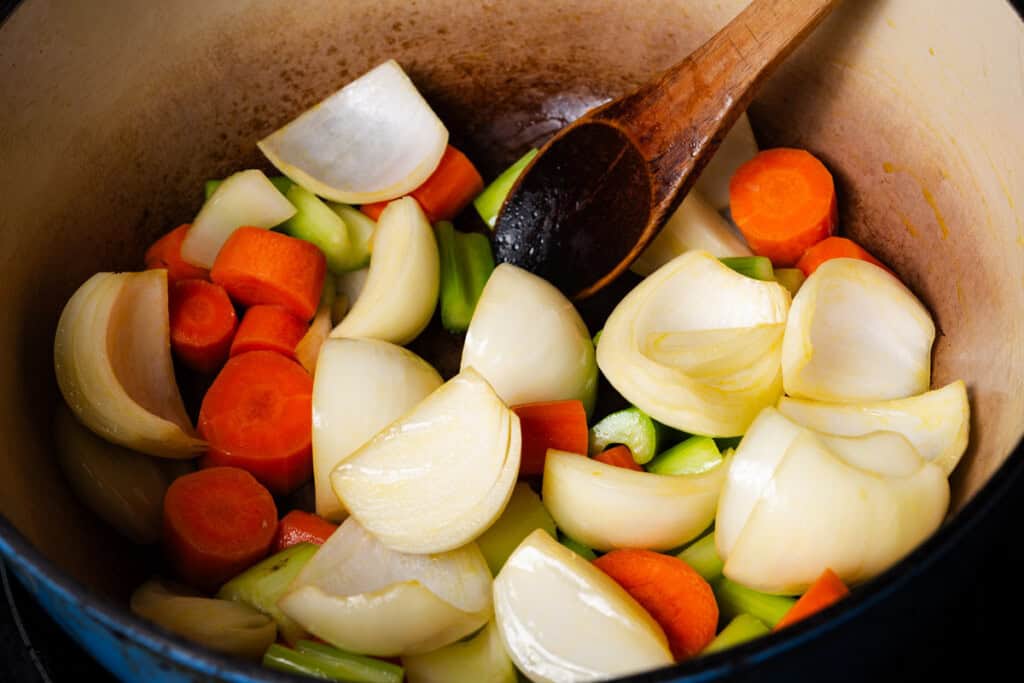
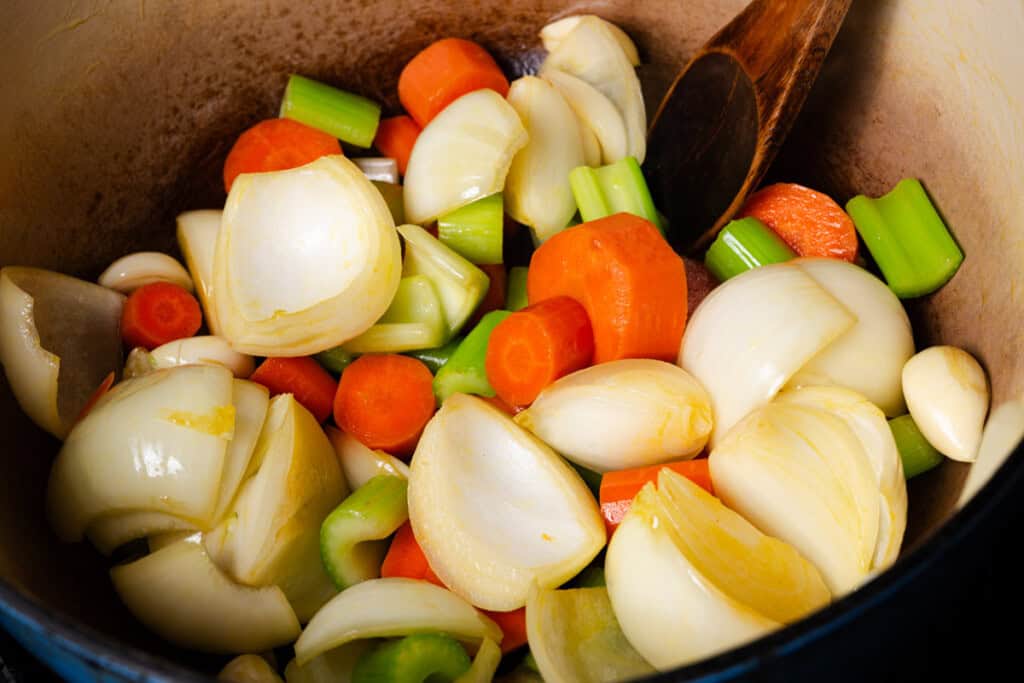
Now it’s time to make the soup. You’ll want to roughly chop the veggies and peel the garlic.
Then, heat a stockpot or large enameled Dutch oven over medium heat. Add the olive oil. Once the oil is hot, add the onions, carrots, and celery. Cook the veggies until lightly golden, about 4 minutes. Then, add the garlic and cook for another 30 seconds, until it’s fragrant.
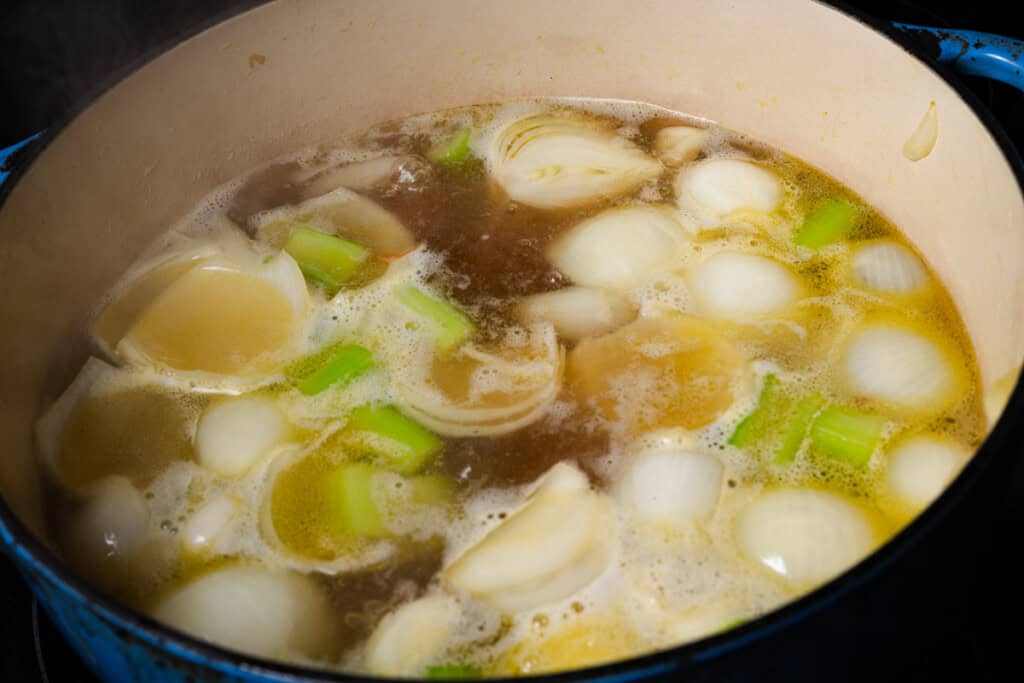
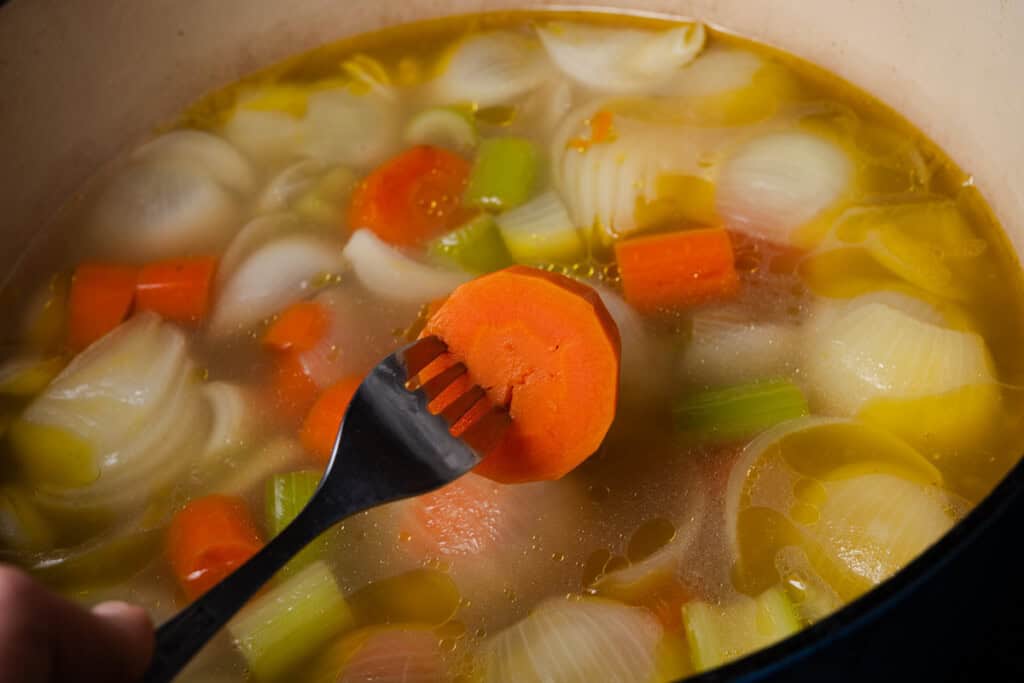
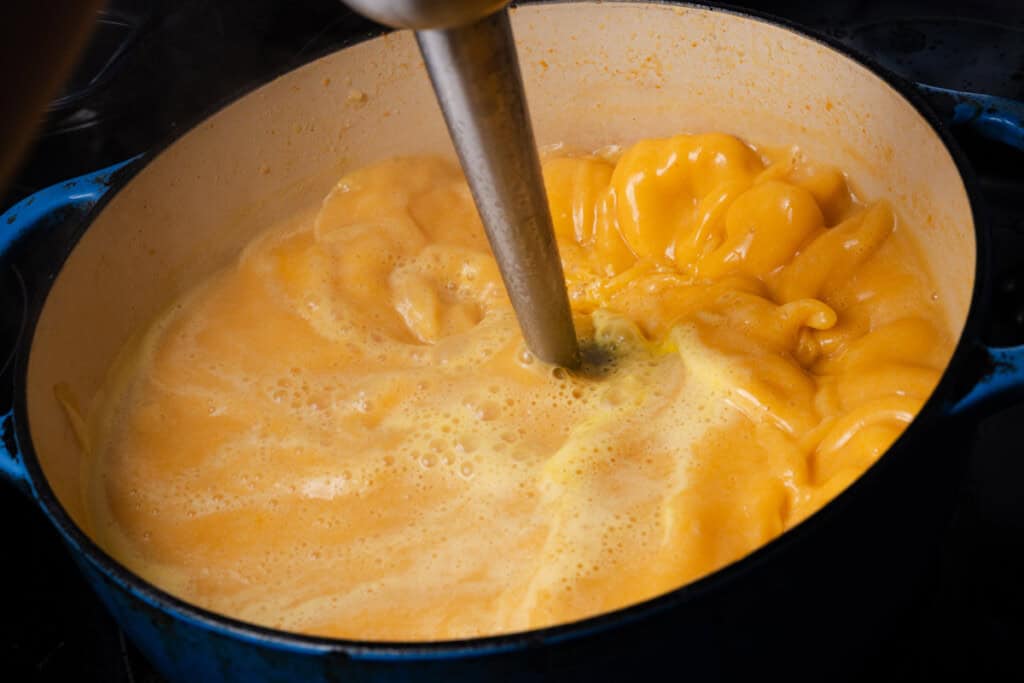
Pour 8 cups of the prepared stock into the pot and bring it to a boil over high heat. Once it reaches a boil, reduce the heat to low. Cover the pot and simmer for 20 minutes, until the veggies are soft. Then, use an immersion blender to blend until the veggies are completely blended into the soup.
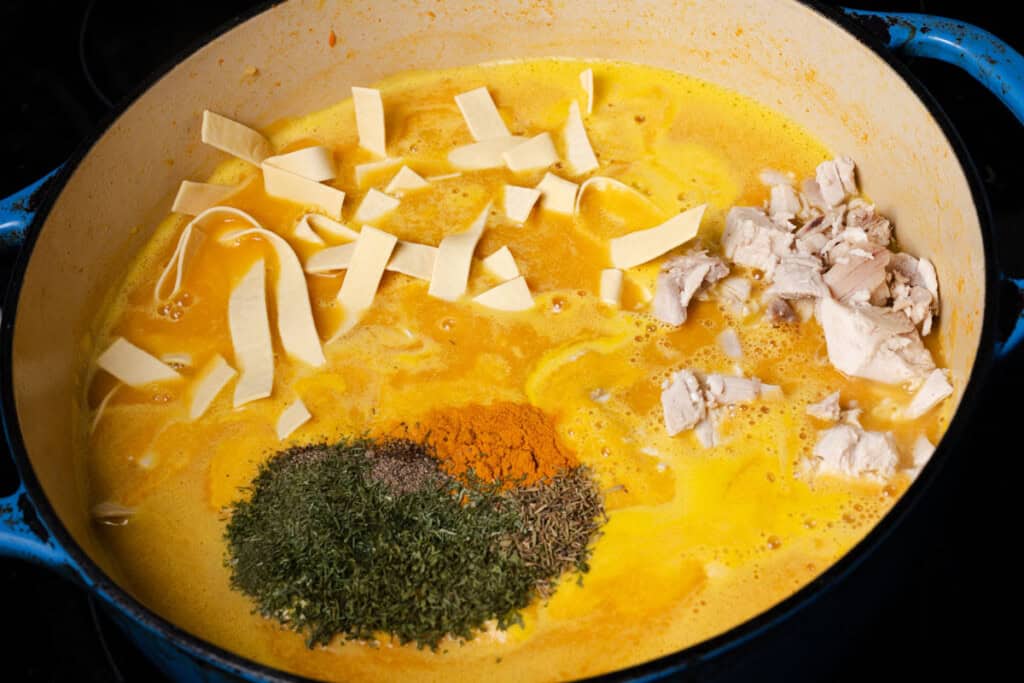
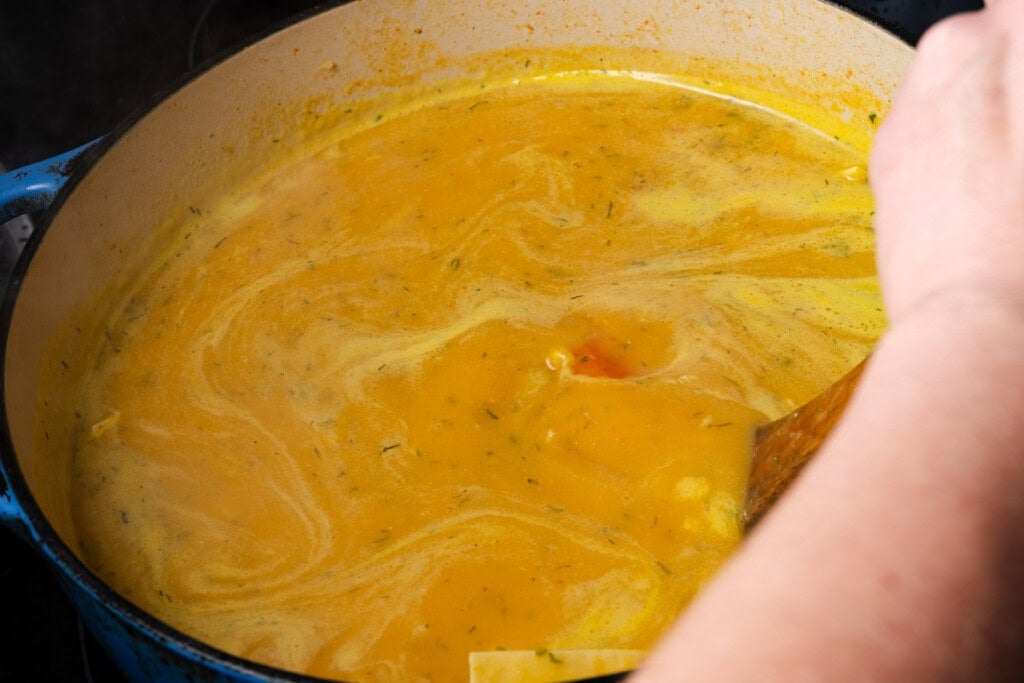
Return the broth to a boil. Then, stir in the egg noodles, cooked chicken, and remaining herbs and spices. Boil for 15 minutes, stirring occasionally to keep the noodles from sticking.

Serve hot and enjoy!
Recipe Shortcut
Short on time? Skip the steps of poaching the chicken and making stock. Use 8 cups of frozen homemade bone broth or high-quality store-bought bone broth. And use 2 ½ cups of shredded rotisserie chicken. Be sure to adjust the seasonings at the end since you’ll be using a different broth.
Tips for Clearer Stock
- Start with cold water.
- Avoid browning the chicken and veggies.
- Regulate the temperature to avoid a rolling boil. A gentle simmer produces a clearer stock.
- Don’t overstir the stock while cooking and straining.
- Partially cover the pot while simmering to control both temperature and evaporation. This helps produce a clear, non-cloudy stock.
How to Store, Freeze, and Reheat
- Allow leftovers to cool, then refrigerate in a covered container for up to 4 days.
- Freeze for up to 6 months.
- Microwave individual servings in a microwave-safe bowl or reheat gently on the stovetop.
- If leftovers are too thick, thin them with a small amount of chicken stock or water.
Using Leftover Chicken and Stock
- Make a second batch of soup! There will be enough stock and chicken to make 2 batches of soup. My favorite egg noodles come in a 16-ounce bag, which is perfect for 2 batches.
- Leftover chicken stock and cooked chicken can both be frozen.
Recipes for Using Up Leftover Chicken
- Make a batch of Cranberry Pecan Chicken Salad.
- Use it in a casserole. It works great in King Ranch Chicken Casserole and Cheesy Chicken Spaghetti.
- Make slow cooker Buffalo Chicken Dip for a comforting appetizer.
Recipes for Using Up Leftover Stock
- Make this Pumpkin Sauce for Italian sausage ravioli.
- Whip up a big batch of Turkey Chili.
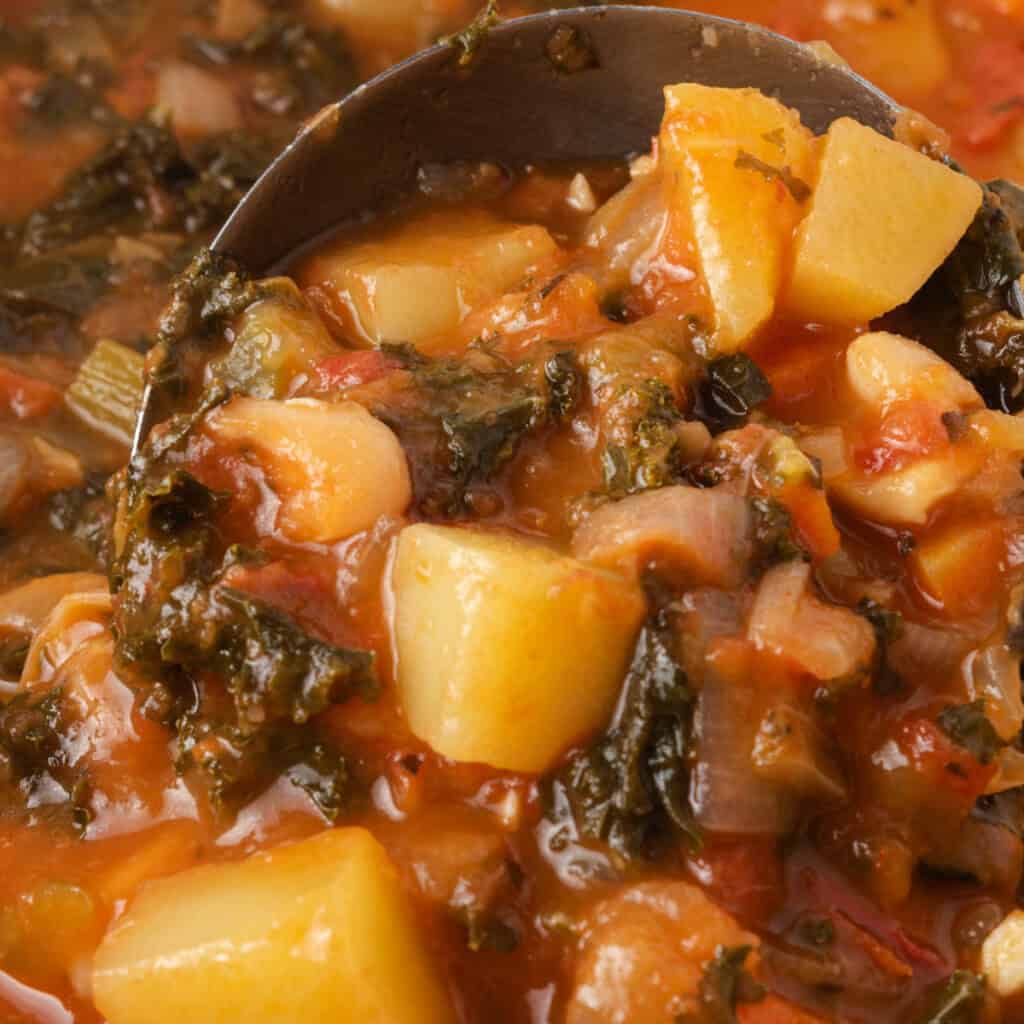
- Make another cozy soup. Try my Creamy Vegetable Soup or this Hearty Fall Version of Minestrone.
Pro-tip: If you need an idea to use up ginger or cloves, try making a fall simmer pot!
Serving Tips
When to Serve
- This nourishing chicken noodle soup is perfect for cozy nights and family dinners.
- It’s a great kid-friendly recipe to make during cold and flu season.
- You can also make a batch for weekday lunch meal prep.
Complete the Meal
This soup is a complete meal! We like to cozy up with a big bowl of it.
To round out the meal, pair it with homemade cheddar bay biscuits and a green salad.

More Cozy Soup Recipes

Don’t forget to pin this recipe for later.
If you loved this recipe, please let me know in the comments. Don’t forget to leave a rating!
The Recipe
PrintHealing Chicken Soup with Hidden Veggies (From Scratch)

This from-scratch chicken soup is loaded with anti-inflammatory ingredients to comfort and heal!
- Prep Time: 30 minutes
- Cook Time: 4 1/2 hours
- Total Time: 0 hours
- Yield: 10 cups 1x
- Category: Soup
- Method: Simmer
- Cuisine: American
Ingredients
For the Chicken and Stock
- 3 quarts cold water
- 5 cloves of garlic, peeled
- 1 onion, peeled and quartered
- 1 teaspoon peppercorns
- 2 bay leaves
- 1 teaspoon fine sea salt
- 1 whole chicken (about 5 pounds)
- 1 quart of cold water
- 3 cloves
- 1 inch knob of ginger
- Piece of kombu (optional)
- Handful of dried shiitake mushrooms (optional)
- 1 teaspoon unrefined sea salt
For the Soup
- 1 tablespoon olive oil
- 2 yellow onions, peeled and quartered
- 2 large carrots, peeled and roughly chopped
- 3 stalks of celery, roughly chopped
- 10 cloves of garlic, peeled
- 8 cups prepared chicken stock
- 1 teaspoon freeze-dried dill
- 1/2 teaspoon dried thyme
- 1/2 teaspoon dried parsley
- 1 teaspoon sea salt
- 1/2 teaspoon turmeric
- 1/2 teaspoon pepper
- 2 1/2 cups cooked chicken (half a chicken)
- 8 ounces Mrs. Miller’s wide egg noodles (half a bag)
Instructions
Cook the Chicken and Make the Stock
- In a large stockpot, add 3 quarts of cold water, garlic, onion, peppercorns, bay leaves, and 1 teaspoon of salt. Stir to dissolve.
- Place the whole chicken in the pot. There should be enough water to cover the chicken by ½ an inch. Add more cold water if needed.
- Heat over medium-high heat until it reaches a simmer. Cover and reduce the heat to low.
- Simmer covered for 1 hour, or until the thickest parts of the breast and thighs reach 165℉.
- Transfer the chicken to a dish and let it cool enough to handle. Then, remove the meat and shred or chop it up.
- Refrigerate half of the meat for the soup and save the rest for another use.
- Return the carcass and juices to the pot. Add 1 quart of cold water, cloves, ginger, kombu (optional), dried shitakes (optional), and 1 teaspoon of salt.
- Bring to a simmer over medium-high heat. Cover it with the lid tilted. Then, reduce the heat to low and simmer for 2 to 4 hours.
- Strain the stock through a fine-mesh strainer or a colander lined with cheesecloth into a large heat-proof container. I like to use 2 half-gallon glass jars. You should have about 1 gallon of finished stock. You will need half of the stock for the soup. The remaining stock should be cooled. Then, refrigerate or freeze.
- Optional: Use a spoon to skim the layer of fat off the top for a less fatty stock.
Make the Soup
- Heat a large stockpot or Dutch oven over medium heat. Add the olive oil and heat until the oil is hot. Add the onions, carrots, and celery. Cook for about 4 minutes until golden but not brown.
- Then add the garlic and cook until it becomes fragrant, about 30 seconds.
- Pour in 8 cups of the prepared chicken stock. Bring to a boil over high heat, then reduce the heat to low and simmer, covered, until the veggies are soft.
- Use an immersion blender to puree until it’s smooth.
- Return to a boil.
- Then, stir in the noodles, 2 ½ cups of cooked chicken, and the remaining herbs and spices. Boil for 15 minutes, stirring occasionally to keep the noodles from sticking.
- Taste and adjust salt and pepper. Serve hot.
Notes
- Refrigerate the leftovers for up to 4 days.
- If you don’t have an immersion blender, you can transfer the soup, in batches, to a regular blender. Blend each batch until smooth and return to the pot once blended.
- Most chickens will be done in 1 hour. Cooking time can vary depending on the size of the chicken and temperature variations on different stoves.
- When you remove the chicken from the pot, transfer it to a dish with raised sides to catch the juice.
Variations
Shortcut Method
Short on time? Use 8 cups of frozen homemade bone broth and 2 ½ cups of shredded rotisserie chicken. Skip to the making the soup section in the instructions. Be sure to adjust the seasonings at the end since you’ll be using a different broth.
Add Beans
Add a can of rinsed and drained navy or great northern beans when you add the chicken and noodles to the broth. They’re creamy, hearty, and add extra fiber.
Skip the Puree
If you prefer to skip the blending, you’ll need to prepare the vegetables differently. Dice the onions, carrots, and celery, and mince the garlic before adding them to the soup. This will change the color, consistency, and flavor of the soup.
Make A Second Batch of Stock
I like to make a second batch of stock out of a chicken carcass. It’s weaker than the first, but still nutritious and great for cooking. If you do this, you’ll need 2 large pots. You can also do this in an Instant Pot.
Nutrition
- Serving Size: 1 cup
- Calories: 254
- Sugar: 5.8 g
- Sodium: 565.5 mg
- Fat: 7.2 g
- Carbohydrates: 29.1 g
- Fiber: 2.2 g
- Protein: 17.7 g
- Cholesterol: 51.1 mg
Frequently Asked Questions
Yes, you can freeze this soup. But the noodles will absorb more liquid and soften when thawed and reheated.
No, but if you skip this step, you’ll need to prep the veggies differently. Dice the onions, carrots, and celery into bite-sized pieces and mince the garlic.
Hearty, homestyle, wide egg noodles work best. My favorite brand is Mrs. Miller’s.



This sounds delicious. Can’t wait to make it. Thanks for sharing!
Thank you Haley! I hope you enjoy it:)